- Little Forests Kingston
- Posts
- Rethinking our relationship to food
Rethinking our relationship to food
How do we respect the animals and plants we depend upon? Also in this newsletter: some updates on our plans for 2026
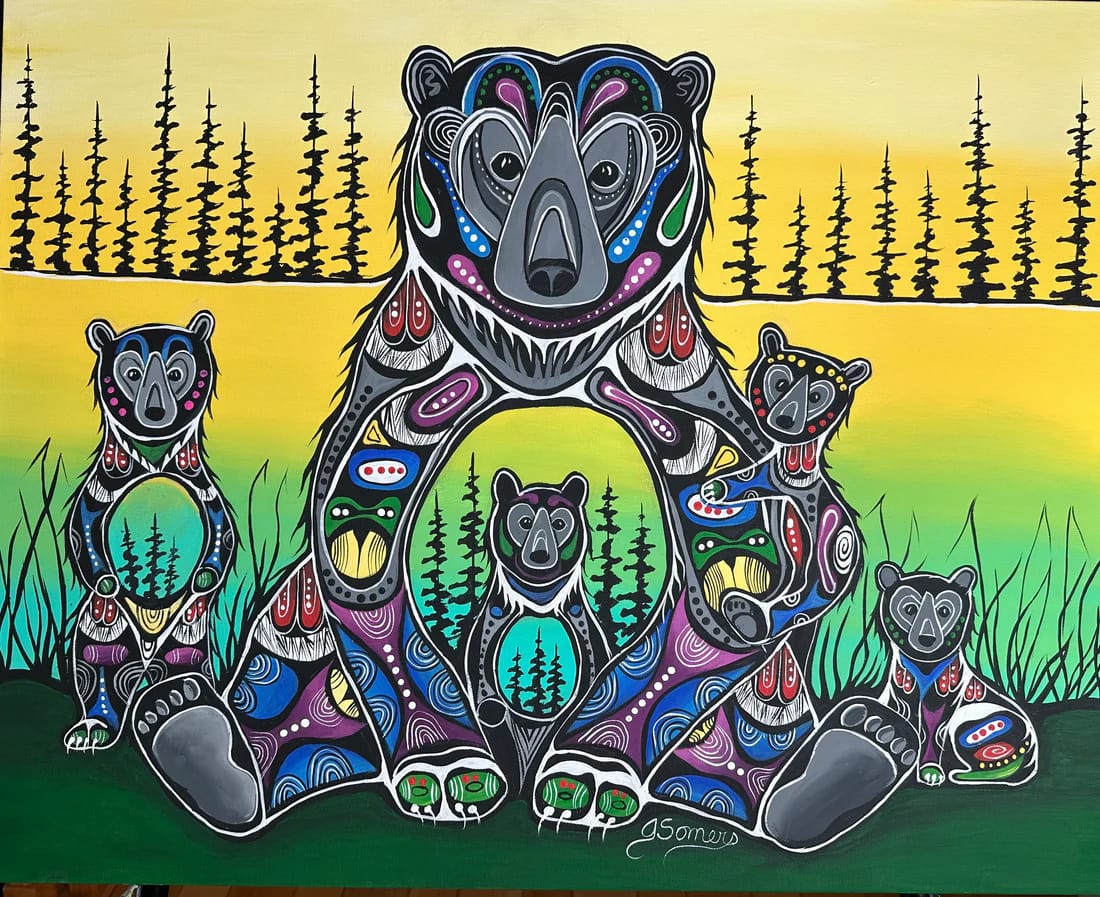
Happy Mkwa-giizis (Bear Moon)! We hope you are keeping warm in this chilly Winter weather. While doing some research about bears, I came across a short video from Anton Treuer, whose Indigenous name is Waagosh, and who a is descendant of the Leech Lake and White Earth Bands of Ojibwe, about the “Breath of the Bear”, which is the foggy day when bear cubs are born. This is one of many examples of knowledge that Indigenous peoples have which is initially discredited by western science, and then proven afterwards through the scientific method. I’ll let Anton explain the rest.
Announcements
We’ve joined the Kingston Climate Partnership (KCP)!
Little Forests Kingston has joined the Kingston Climate Partnership (KCP), which launched in December. The KCP emerged from the City of Kingston's Climate Leadership Plan and the upcoming Climate Change Adaptation Plan. The City of Kingston is the trustee and Julia Stroud from Sustainable Kingston is the Chair.
The KCP engages many different individuals and organisations across the city to develop a holistic approach that reduces GHG emissions and builds community resilience [and biodiversity] in the face of a changing climate. The partnership includes four working groups that will act as laboratories for innovative thinking: Buildings & Energy, Integrated Mobility, Food, and Biodiversity.
Joyce is Coordinator for the biodiversity working group, which held their first meeting on January 27 and discussed a series of questions that resulted in possibilities to explore further including:
Facilitating walkshops centred around understanding questions related to biodiversity and other related topics
Participating in the City Nature Challenge
Creating a biodiversity map that highlights patches and corridors for various species to inspire people and organizations to transform their properties, encouraging adoption through signage, examples and narratives
Hosting a multispecies gathering in the Fall
If you're interested in representing Little Forests Kingston on the Buildings & Energy, Integrated Mobility or Food working groups, email [email protected].

Brainstorming notes from the first KCP biodiversity working group session
Host a lawn transformation workshop
Want to transform your lawn but not sure how and need support? Offer to be the site for a workshop offered by Little Forests Kingston and the 1000 Islands Master Gardeners. We provide plants and expertise! Here are some workshops we’re hoping to offer if we find the right workshop host:
Pocket wetland: Transform a wet spot or a downspout into a dragonfly lair
Pocket food forest: Grow a climate smart food forest in a small space
Pocket meadow: Transform your boulevard (strip between the sidewalk & the road) into a bird and pollinator meadow
Ditchscaping: Transform your ditch into a vibrant ecosystem that filters water, reduces erosion and supports pollinators and birds
Plant a hedgerow as a living fence for pollinators and birds
Pocket forest for energy efficiency: Save energy (and sink carbon) by strategically locating trees, shrubs and vines
What we need from interested hosts:
Clear turfgrass and prohibited plants from the planting location in advance of the workshop
Steward the planting after the workshop
Host up to 25 participants on their property, providing access to a washroom
If you’re interested in learning more, email [email protected]

Tomatoes at a farmer’s market
Gratitude and the ethics of eating
In the past couple of newsletters, we talked about how trees can help us become more climate resilient and how we can take care of them properly. This time, we’ll be switching things up with a multispecies thought experiment.
As humans, we must eat to live. Unlike our plant relatives, we can’t photosynthesise, and we aren’t detritivores like vultures or worms, so we can’t help to decompose beings that are already dead. We have to take the life of other beings to feed ourselves.
Humans have long pondered the ethical implications of eating to live, particularly when it comes to taking the lives of others. Jainism, a religion from South Asia that has existed for thousands of years, is probably one of the best and clearest examples of how humans have dealt with this dilemma, but other cultures undoubtedly had their own perspectives on this.
In my opinion, the need to answer this question has never been greater. Because of industrialisation and colonisation, we have become more and more detached from where we get our foods (and other products), with fewer and fewer people involved with farming. This means that it’s easier to turn a blind eye to where our food comes from and how it’s produced.
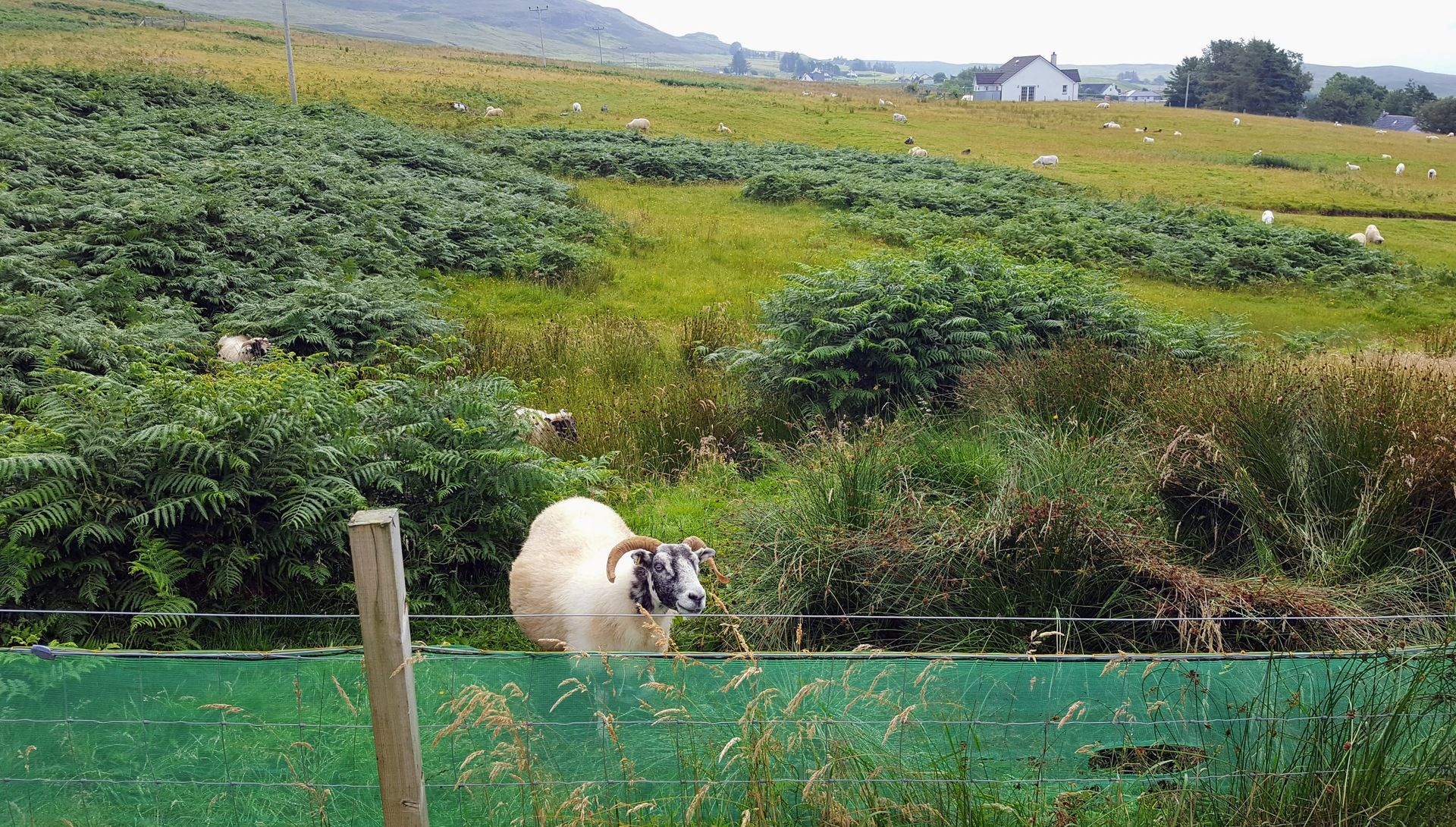
Grazing sheep in northwestern Scotland
Respecting farm animals
The word livestock is incredibly disrespectful - when you break it down, it essentially means “living inventory”, a term that implies ownership over and objectifies a living being. The very fact that there isn’t another good word for this is a symbol of how we are told to view the animals we eat: as living assets that are owned, used, and consumed by humans in many different forms.
How do we reconcile with the fact that we are taking the lives of farm animals? After seeing a video from a factory farming operation, this is a question I’m asking myself. Most of us are aware that some farms treat animals better than others, and that you can buy free-range or organic meat if you want to be more ethical about your meat consumption. But let’s ignore the labels for a moment and think a bit more deeply about this.
I am often reminded from a passage in Robin Wall Kimmerer’s Braiding Sweetgrass, about a hunter:
In a Seventh Generation ball cap and a thin gray ponytail, Oren gets his turn at a story and leads us along with him, through thickets and down ravines to get to his favorite hunting spot. Smiling in recollection, he says, “I must have seen ten deer that day, but I only took one shot.” He tips his chair back and looks at the hill, remembering. The young men listen, looking intently at the porch floor. “The first one came crunching through the dry leaves, but was shielded by the brush as it wove down the hill. It never saw me sitting there. Then a young buck came moving upwind toward me and then stepped behind a boulder. I could have tracked it and followed it across the crick, but I knew it wasn’t the one.” Deer by deer, he recounts the day’s encounters for which he never even raised his rifle: the doe by the water, the threepointer concealed behind a basswood with only its rump showing. “I only take one bullet with me,” he says.
The young men in T-shirts lean forward on the bench across from him. “And then, without explanation, there’s one who walks right into the clearing and looks you in the eye. He knows full well that you’re there and what you’re doing. He turns his flank right toward you for a clear shot. I know he’s the one, and so does he. There’s a kind of nod exchanged. That’s why I only carry one shot. I wait for the one. He gave himself to me. That’s what I was taught: take only what is given, and then treat it with respect.” Oren reminds his listeners, “That’s why we thank the deer as the leader of the animals, for its generosity in feeding the people. Acknowledging the lives that support ours and living in a way that demonstrates our gratitude is a force that keeps the world in motion.”
The Honorable Harvest does not ask us to photosynthesize. It does not say don’t take, but offers inspiration and a model for what we should take. It’s not so much a list of “do not’s” as a list of “do’s.” Do eat food that is honorably harvested, and celebrate every mouthful. Do use technologies that minimize harm; do take what is given.
Would you be able to look the animal you’re eating in the eye and, in good conscience, thank them? Could you honestly say that they were honourably harvested, and that they gave themselves as a gift? This is the question I now ask myself.
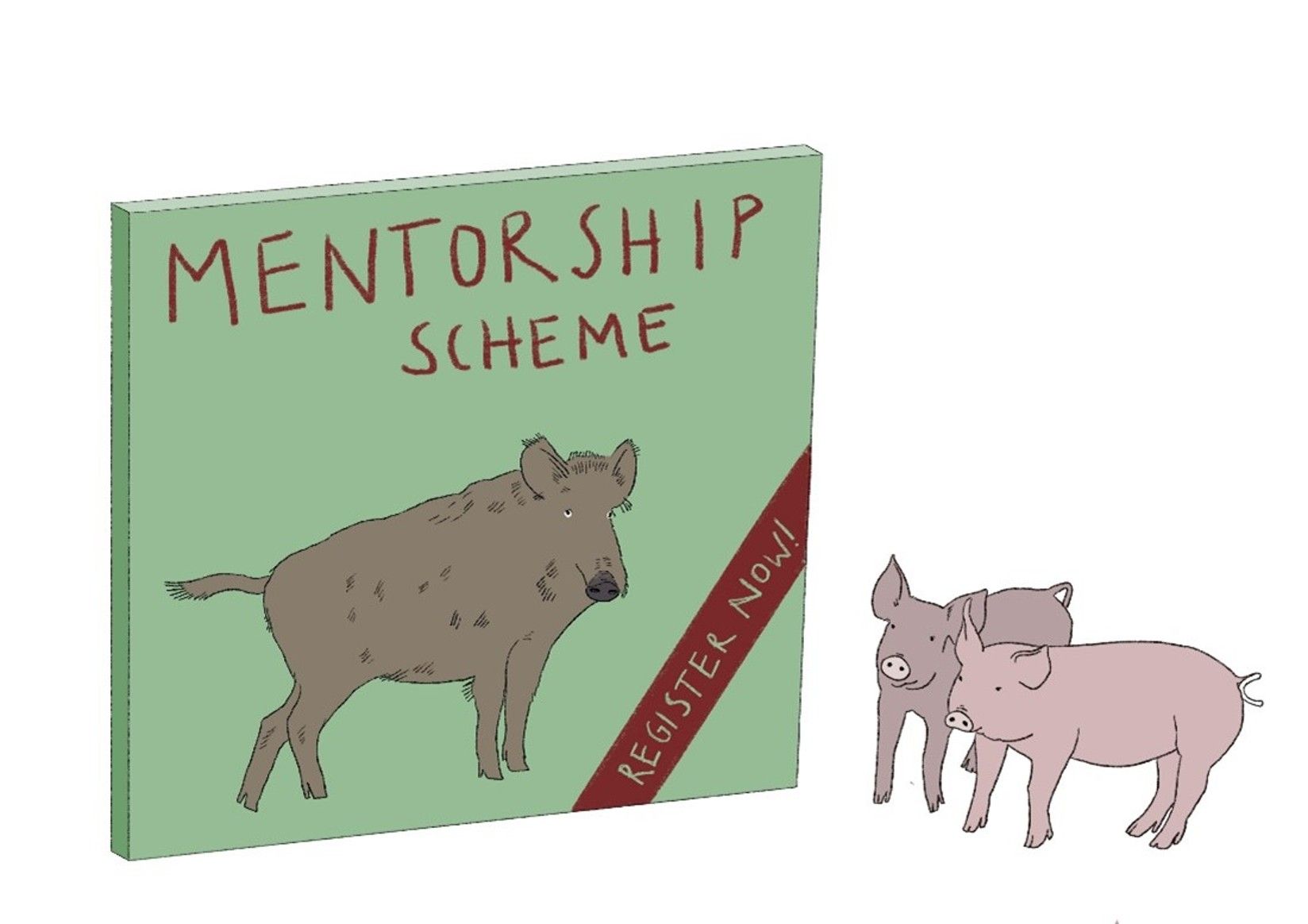
To think of farm animals in this way is to reimagine them as our kin. How might we see them not as food on our plates– as meat– but as living, breathing beings with thoughts, feelings, and aspirations? Gladkova and Matsuda explored this as it relates to pigs through their project, Re: Pig, some of which is presented on their blog. There are lots of great drawings and ideas, but some that stood out to me are “Pig Radio”, which was created in response to studies looking at how different types of music affected pigs’ growth, and which asks the question, what music would pigs actually want to listen to, without worrying about growth implications? I also really like the “Wild Boar Mentorship Scheme” - what would that look like? What would pigs learn from a wild boar mentor? The image encourages us to think about what goals and aspirations pigs have for their lives.
An extension to plants
If we can imagine animals complexly, then perhaps we can also imagine plants complexly. How does a plant feel about being sprayed with pesticides? Do they feel sad because their insect friends can no longer visit them? Does a stalk of corn in the middle of a corn field feel anxious about being “just another corn stalk”, surrounded by tens of thousands of other corn stalks doing the same job? Are trees in parks lonely because the other trees are too far from them to form a proper mycorrhizal bond?
When I ask myself these kinds of questions, I wonder if we shouldn’t also be thinking about how plants are farmed. Can I truly honour and respect my tomato if it was grown in a vast monoculture that looks more like a factory line than a living ecosystem? There is no doubt in my mind that a bean plant would rather grow among the corn and squash, where they can be valued for their uniqueness, than in that kind of setting. Just because animals are easier for us to understand doesn’t mean we shouldn’t give plants the respect they deserve.
Final thoughts
This kind of thinking has been around for millennia, and is at the heart of the Honourable Harvest. When we consider the feelings, goals, and wellbeing of our Earthly Kin, we feel a greater sense of gratitude for their gifts to us, and we can begin to build reciprocal and respectful relationships with the other beings that we depend on to live.
I encourage you to read (or reread) the Honourable Harvest chapter of Robin Wall Kimmerer’s book Braiding Sweetgrass. You can also watch this short video of her speaking about the honorable harvest:
— Robert